

Recently updated on October 2nd, 2026 at 05:45 am
India is a sensory feast in every sense of the word. From the aroma of sizzling spices in bustling markets to the vibrant colours of curries and street snacks, the country offers one of the world’s most diverse and exciting food scenes. If you’re wondering what to eat in India, you’re in for a culinary adventure that varies wildly by region, culture, climate and history.
For travellers from Australia and New Zealand seeking rich flavours, authentic experiences and unforgettable meals, India delivers at every turn. This guide breaks down the must-try dishes across India’s regions, along with practical tips to help you eat well and travel confidently.
Northern Indian Cuisine
Northern India is known for its rich, hearty dishes often cooked with dairy, ghee and aromatic spices. Bread like naan and paratha plays a starring role here. Many of the Indian dishes that are popular in Australia and New Zealand originate in northern India.
Influences from the Mughal era are evident, bringing with them techniques like slow cooking, marinating and the use of nuts and dried fruits in savoury dishes. For travellers, northern India offers a familiar entry point into Indian cuisine, combining bold flavours with familiar textures and some of the country’s most iconic culinary experiences.
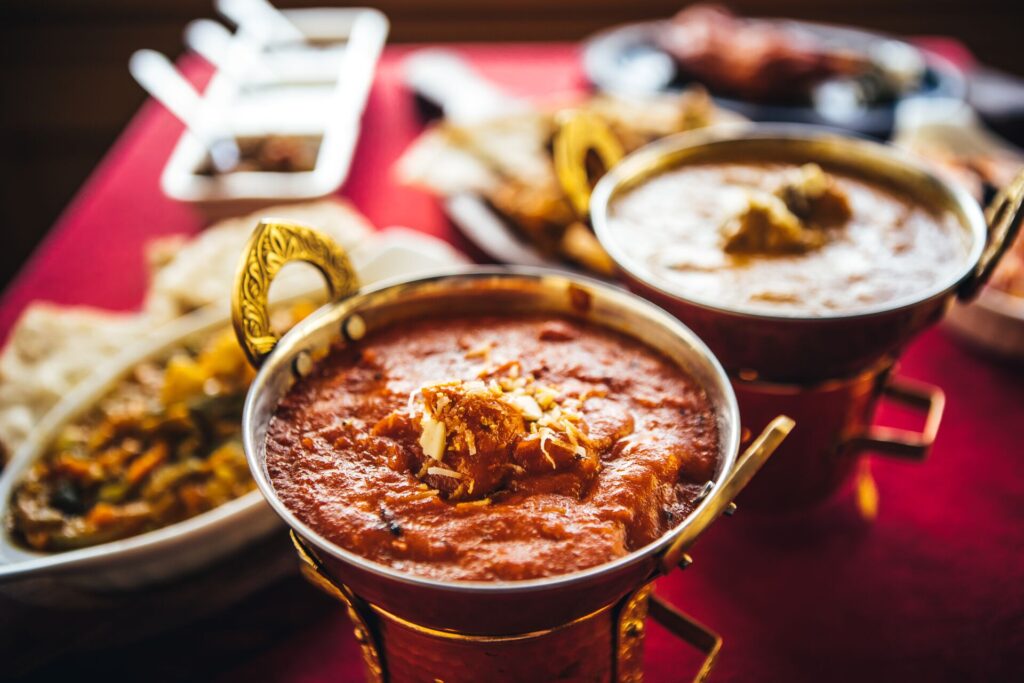
Butter Chicken
India’s most famous export, butter chicken (murgh makhani) originated in Delhi and remains one of the city’s most iconic dishes. This dish features tender chicken simmered in a creamy tomato-based sauce infused with butter, garlic and warming spices. It’s mildly spiced and perfect for those easing into Indian cuisine. Pair it with naan to soak up every drop of the saucy goodness.
Rogan Josh
A Kashmiri classic, rogan josh is a deeply flavoured lamb curry with a rich red hue from Kashmiri chillies. Despite its colour, it’s more aromatic than fiery, with hints of cardamom, cinnamon and cloves. It’s a must-try for lovers of slow-cooked, fragrant curries.
Dal Makhani
A staple across northern India, dal makhani is a comforting dish made from black lentils and kidney beans simmered overnight with butter and cream. Rich, velvety and packed with flavour, it’s a favourite for vegetarians and pairs beautifully with rice or roti.
Naan and Paratha
In northern India, flatbreads are a staple at every meal. Naan is soft and fluffy, cooked in a tandoor oven, while paratha is pan-fried and often stuffed with fillings like potato, paneer or cauliflower. These breads are your perfect companions for soaking up the sauces of fragrant curries.
Chana Masala
A popular vegetarian dish, chana masala centres around chickpeas cooked in a tangy, spiced tomato gravy. It’s hearty, protein-rich and widely available, making it a reliable go-to meal for travellers.
Northern India with Adventure World
Authentic Golden Triangle
North Indian wildlife tour | Adventure World
Temples & Tigers tour | India | Adventure World
Snow Leopards of Ladakh tour | India | Adventure World
Authentic Rajasthan | India | Adventure World
Taj & Tigers | India | Adventure World
Royal Rajasthan luxury tour | India | Adventure World
Expedition of the Brahmaputra & North India | Adventure World
Southern Indian Cuisine
Southern India offers a refreshing contrast to the richer, heavier dishes of the north. Meals are built around rice, often steamed or as batters for dishes like dosa and idli. Coconut appears as fresh, grated, as milk or oil, adding a subtle sweetness and creamy texture.
A defining feature of southern Indian food is its use of tempering (known as tadka), where ingredients like mustard seeds, curry leaves, dried chillies and lentils are briefly fried in hot oil to release their aroma. This gives dishes a distinctive fragrance and layered flavour. Tangy elements such as tamarind and lemon provide a gentle sourness that enhances the overall balance.
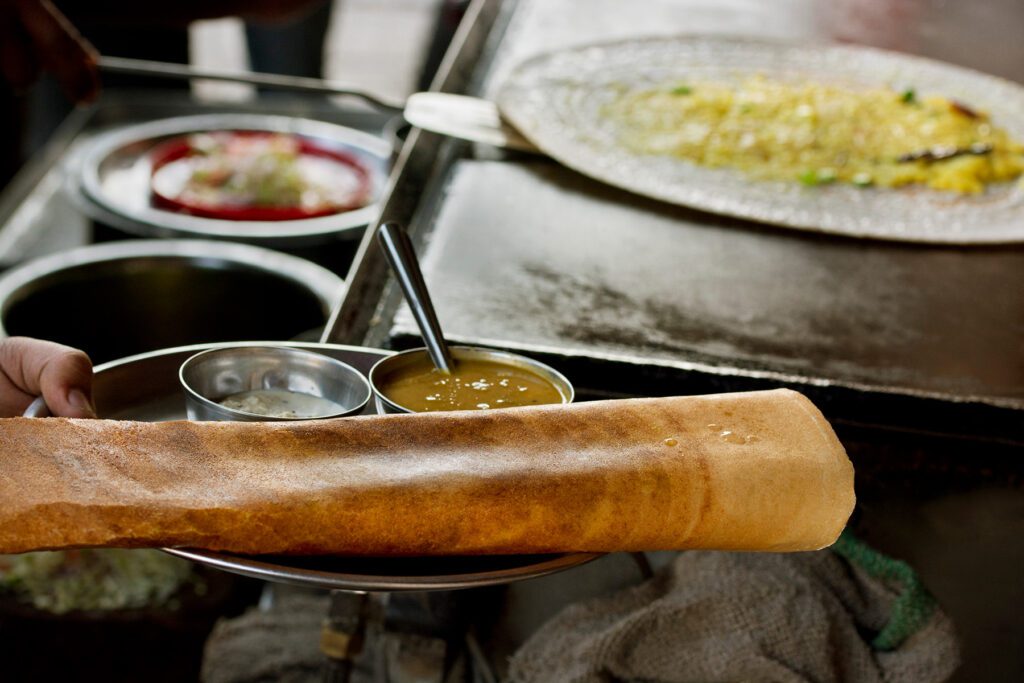
Masala Dosa
One of India’s most beloved dishes, a masala dosa is a crispy fermented rice and lentil crepe filled with spiced potato. It’s served with coconut chutney and sambar (a lentil-based vegetable stew). Masala dosa is ideal for breakfast or as a light meal.
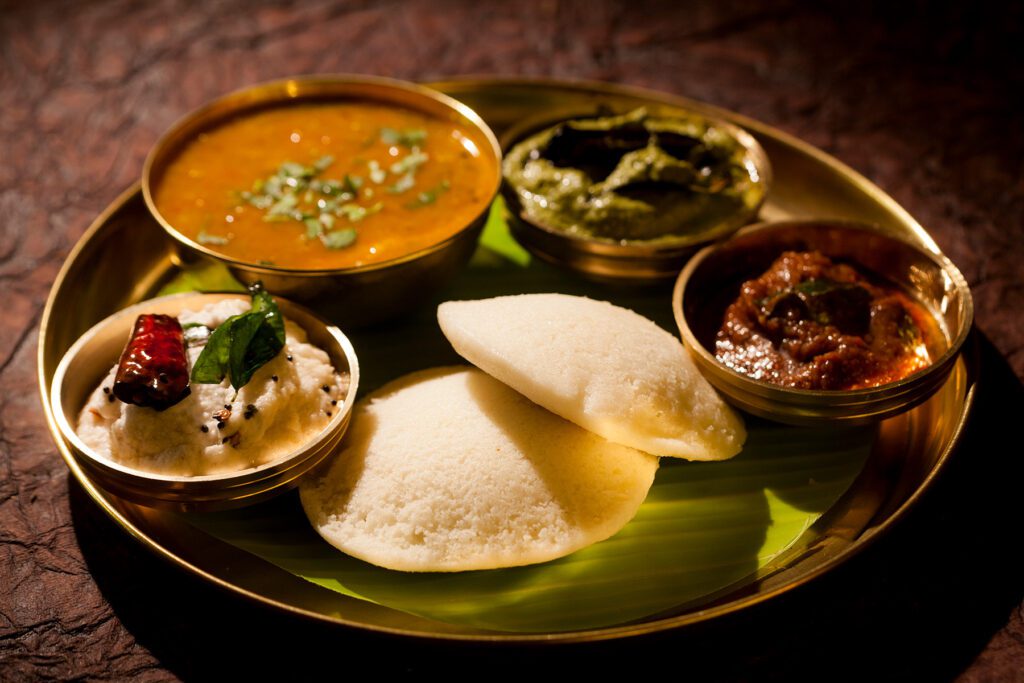
Idli and Sambar
Idlis are soft, steamed rice cakes that are gentle on the stomach and perfect after long travel days. Paired with sambar and chutneys, they’re a nutritious and satisfying option widely available across the south.
Fish Curries
Coastal regions like Kerala and Tamil Nadu are famed for their fish curries, often cooked with coconut milk, tamarind and spices. Expect fresh, vibrant flavours that highlight the region’s coastal bounty.
Upma
Upma is a savoury semolina porridge cooked with vegetables, mustard seeds and curry leaves. It’s simple yet flavourful and commonly eaten for breakfast.
Coconut Chutneys
No southern meal is complete without chutneys. Coconut chutney, often blended with green chillies and herbs, adds freshness and balance to dishes like dosa and idli.
Southern India with Adventure World
South India and Kerala Tour | Adventure World Travel | Adventure World
Indian Sweets and Desserts
India has a serious sweet tooth, and no journey through its cuisine is complete without diving into its desserts. Often tied to festivals, celebrations and religious traditions, Indian sweets are as diverse as the country itself. Expect generous use of milk, sugar, ghee, nuts and fragrant spices like cardamom and saffron.
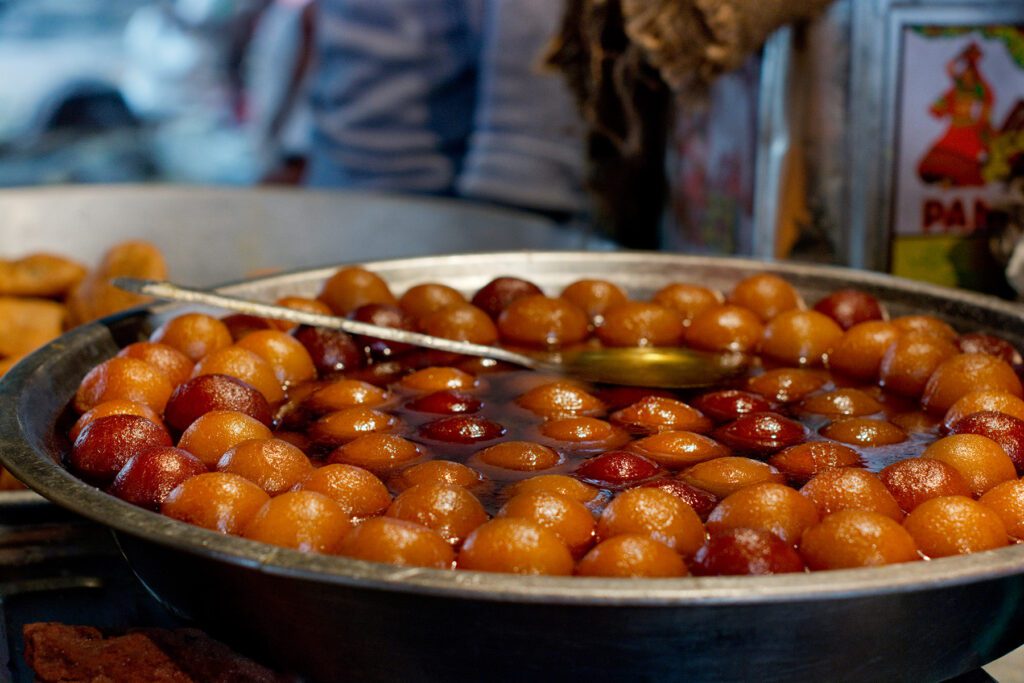
Gulab Jamun
India’s most iconic dessert, gulab jamun is pure indulgence. These soft, melt-in-your-mouth dumplings are made from milk solids, deep-fried until golden, then soaked in a fragrant sugar syrup infused with rosewater and cardamom. You’ll find them served warm in restaurants, at weddings and even roadside stalls. For travellers, it’s an easy entry point into Indian sweets thanks to its familiar donut-like texture.
Jalebi
Jalebi is as eye-catching as it is delicious. Bright orange spirals of fermented batter are deep-fried into crispy coils, then dunked in sugar syrup until glossy and sticky. The combination of crunch and syrupy sweetness makes it irresistible. It’s particularly popular as a morning treat in north India.
Barfi
Barfi is a fudge-like sweet traditionally made from khoya (reduced milk solids)and sugar, flavoured with nuts, coconut or rosewater. You’ll find countless variations across India such as pistachio barfi, cashew (kaju) barfi and chocolate barfi. Many are decorated with edible silver leaf (vark), giving them an elegant, celebratory appearance.
Kulfi
Kulfi is India’s take on ice cream, but with a denser, creamier texture and more intense flavour. Traditionally slow cooked, kulfi is flavoured with saffron, cardamom, pistachios or mango. It’s typically served on a stick or in small cups, making it a refreshing treat on hot afternoons.
Ras Malai
This delicate dessert offers a lighter finish after a rich meal. Ras malai features soft, spongy paneer discs soaked in sweet, thickened milk (rabri) flavoured with saffron and cardamom. Garnished with pistachios or almonds, it’s creamy, sweet and aromatic. It’s popular in eastern India but available nationwide.
Drinks in India
India’s climate and culinary diversity have given rise to a wide variety of drinks, from cooling refreshers to comforting warm beverages. Whether you’re navigating busy markets or relaxing after a long day of sightseeing, there’s always something delicious to sip.
Lassi
Lassi is one of India’s most beloved drinks and a lifesaver in the heat. Made from yoghurt, it can be sweet or savoury. Sweet lassi is often flavoured with sugar, rosewater or fruit. Mango lassi is a favourite among travellers. Savoury lassi, on the other hand, is lightly salted and sometimes spiced with cumin. Thick, creamy and refreshing, it also helps balance out spicy meals.
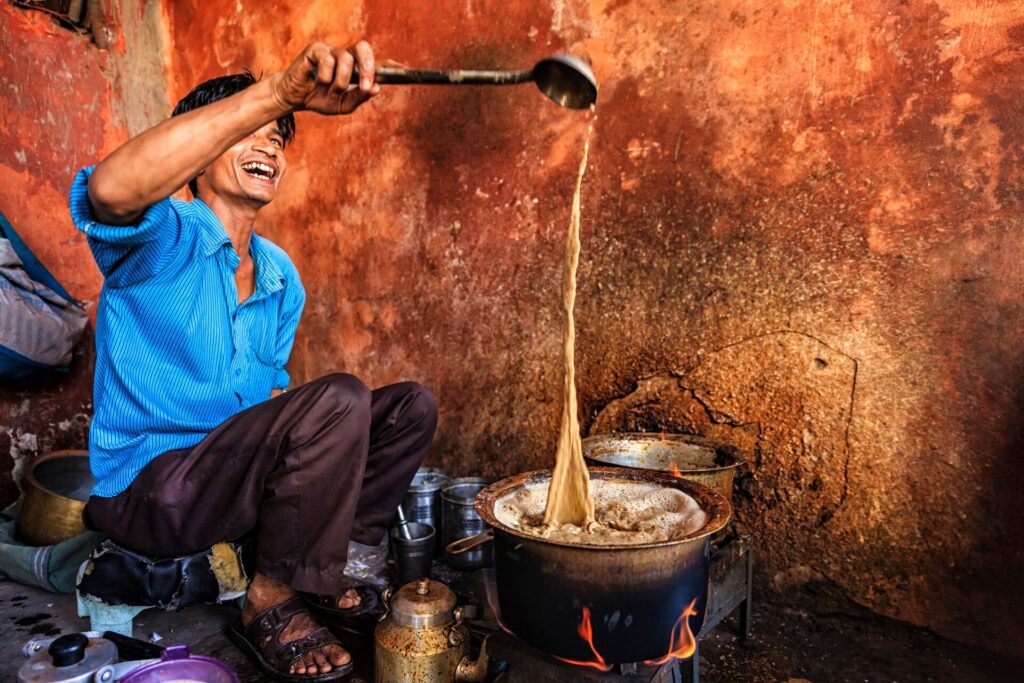
Masala Chai
Masala chai is a cultural ritual. Brewed with black tea, milk, sugar and a warming blend of spices like ginger, cardamom, cinnamon and cloves, it’s served everywhere from street stalls to homes and cafés.
Toddy and Local Spirits
This mildly alcoholic beverage is made from fermented palm sap and is especially popular in coastal regions like Kerala and Goa. India also produces a range of local spirits, including feni (a Goan liquor made from cashew apples or coconut). These drinks can be strong, so it’s best to try them in reputable settings.
Sugarcane Juice
Fresh sugarcane juice is widely available. The juice is extracted on the spot and often flavoured with lime, mint or ginger for extra freshness. It’s naturally sweet but surprisingly refreshing and packed with energy for long travel days exploring.
Coconut Water
When travelling through India’s tropical regions, coconut water is your best friend. Sold fresh from roadside stalls, it’s served straight from the coconut with a straw. Naturally hydrating and full of electrolytes, it’s perfect for staying refreshed while exploring. Vendors will often slice open the coconut afterward so you can scoop out the soft flesh inside.
Vegetarian and Vegan Options in India
India is one of the best destinations in the world for vegetarian travellers. With a substantial proportion of the population following vegetarian diets for cultural and religious reasons, plant-based dining is celebrated. Whether you’re vegetarian, vegan or simply looking to eat more plant-based meals while travelling, you’ll have plenty of choice.
How to Find Plant-Based Dishes
Finding vegetarian food in India is straightforward. Look for signs that say ‘Veg’ or ‘Pure Veg’ as these indicate restaurants that do not serve meat at all. In many cities, especially in Gujarat, Rajasthan and parts of southern India, vegetarian eateries are common.
For vegan travellers, things require a bit more attention. While many dishes are naturally plant-based, ingredients like ghee (clarified butter), paneer (Indian cheese), yoghurt and cream are frequently used. Menus in larger cities and tourist areas often label vegan or dairy-free options, while staff in well-frequented restaurants are typically familiar with dietary requirements. In smaller towns, keeping it simple with naturally vegan dishes like vegetable curries, lentils, rice-based meals and breads like roti (without butter) is a safe bet.
Markets and street food stalls can also be great for plant-based eating, offering fresh fruit, roasted nuts and snacks like chana (spiced chickpeas). However, it’s always worth checking how items are prepared.
Popular Vegetarian Meals
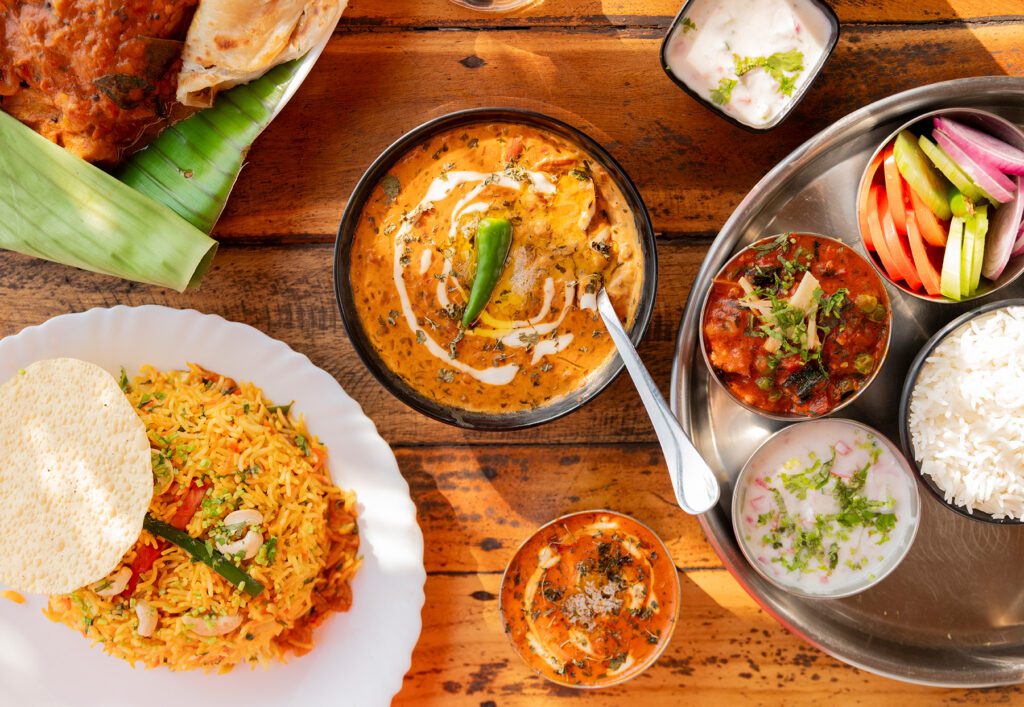
India’s vegetarian cuisine is incredibly rich and varied, with each region offering its own specialties. North Indian favourites like aloo gobi (potato and cauliflower), baingan bharta (smoky mashed eggplant) and rajma (kidney bean curry) are flavourful and widely available.
In the south, dishes like vegetable sambar, rasam (a tangy soup) and coconut-based curries provide lighter options that are often naturally vegan.
Thali meals are platters that include a variety of small dishes. These are an excellent way for travellers to sample multiple flavours in one sitting. Many establishments offer vegetarian thalis, and some will even cater to vegan preferences upon request.
Snacking is another highlight, with vegetarian options like dosa, idli, dhokla, and bhel puri offering delicious, affordable bites throughout the day.
Tips for Eating in India
Eating in India is an unforgettable experience but understanding local customs and knowing a few practical tips can make your culinary journey smoother and more enjoyable.
Understanding Regional Spice Levels
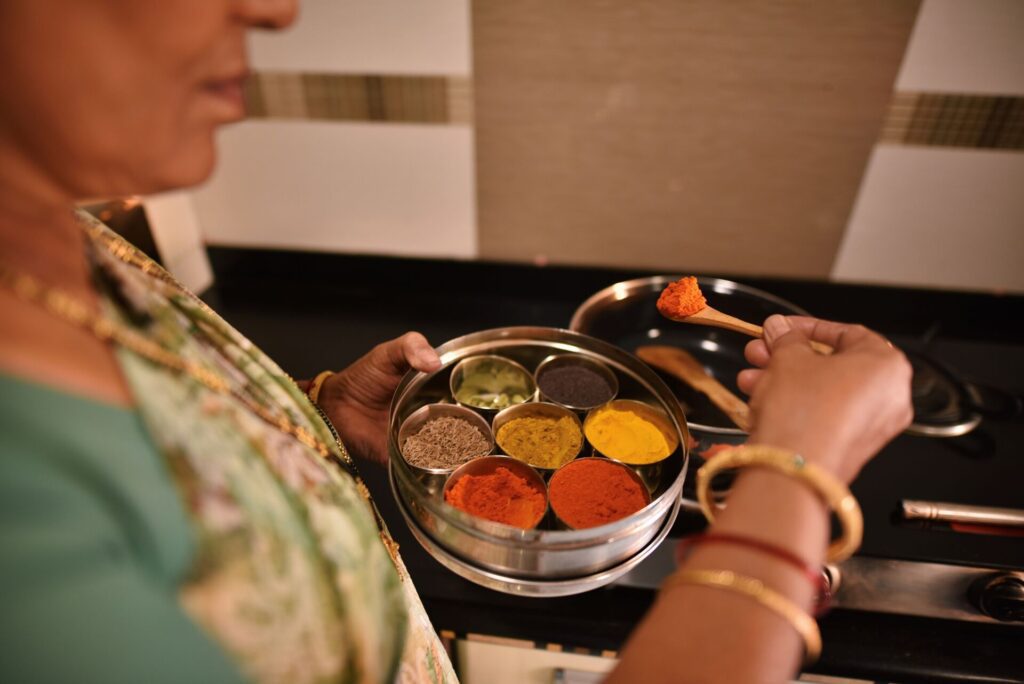
India is synonymous with spice, but that doesn’t always mean heat. Spices in Indian cooking are used for depth and aroma rather than purely for chilli intensity. That said, spice levels vary significantly across regions.
Northern dishes tend to be richer and creamier, often balancing spices with dairy. Southern cuisine, on the other hand, can lean toward spicier and tangier flavours with liberal use of chilli, tamarind and black pepper.
If you’re sensitive to spice, don’t hesitate to ask for ‘mild’ as most restaurants in tourist areas will happily accommodate. Carrying yoghurt-based sides like raita or ordering a lassi can also help cool the palate.
Food Safety Tips
India’s vibrant food scene includes everything from high-end restaurants to bustling street vendors, and while both offer fantastic experiences, it’s wise to be mindful of food safety.
Stick to places that are busy and have a high turnover of customers as this usually indicates fresher food. Choose dishes that are freshly cooked and served hot, rather than items that have been sitting out.
Do not drink tap water – only from sealed bottled water. It’s also a good idea to skip ice in drinks unless you’re 100% certain it’s made from filtered water. When it comes to fresh produce, opt for fruits you can peel yourself, such as bananas or oranges.
Street food is a must-try, but choose stalls where food is prepared in front of you and served piping hot. Trust your instincts. If something doesn’t look clean or fresh, it’s best to move on.
Dining Etiquette in India
Dining in India is often a social and communal experience and understanding a few cultural norms will help you feel more comfortable.
Food is eaten with the right hand, as the left hand is considered unclean. In casual settings, especially when eating bread and curries, you may find yourself encouraged to eat this way. In restaurants, cutlery is usually provided, particularly in urban or tourist-friendly areas.
Sharing dishes is common, especially among family or groups, so don’t be surprised if meals arrive in the centre of the table. It’s polite to accept food when offered, and hospitality is taken seriously.
In some traditional settings, you may be served on a banana leaf, particularly in southern India. Meals are eaten in a specific order, with servers refilling portions frequently, so let them know when you’ve had enough.
Tipping is appreciated but not mandatory. In restaurants, a service charge may already be included, but leaving a small tip for good service is always welcomed.
India with Adventure World
As you journey through India, every dish tells a story of region, tradition, culture and community. From fragrant curries in the north to coconut-laced plates in the south, bustling street food scenes to delicate sweets, discovering what to eat in India is an adventure. Embrace the variety, try something new at every opportunity and allow your tastebuds to guide you just as much as your itinerary. With an open mind and a sense of curiosity, India’s culinary landscape will leave an impression long after your travels end.
Explore Adventure World’s India itineraries
Further Reading
10 Reasons Why You Should Visit Rajasthan
India’s Big Cats: Meet the Majestic Predators of the Subcontinent
Plan your tailor-made India holiday
Inspired to explore India? Adventure World’s itineraries are a starting point for a journey tailored to your interests, travel dates and preferred pace. Explore our India itineraries, or call our Destination Specialists on 1300 363 055 (AU) or 0800 238 368 (NZ) to start planning.