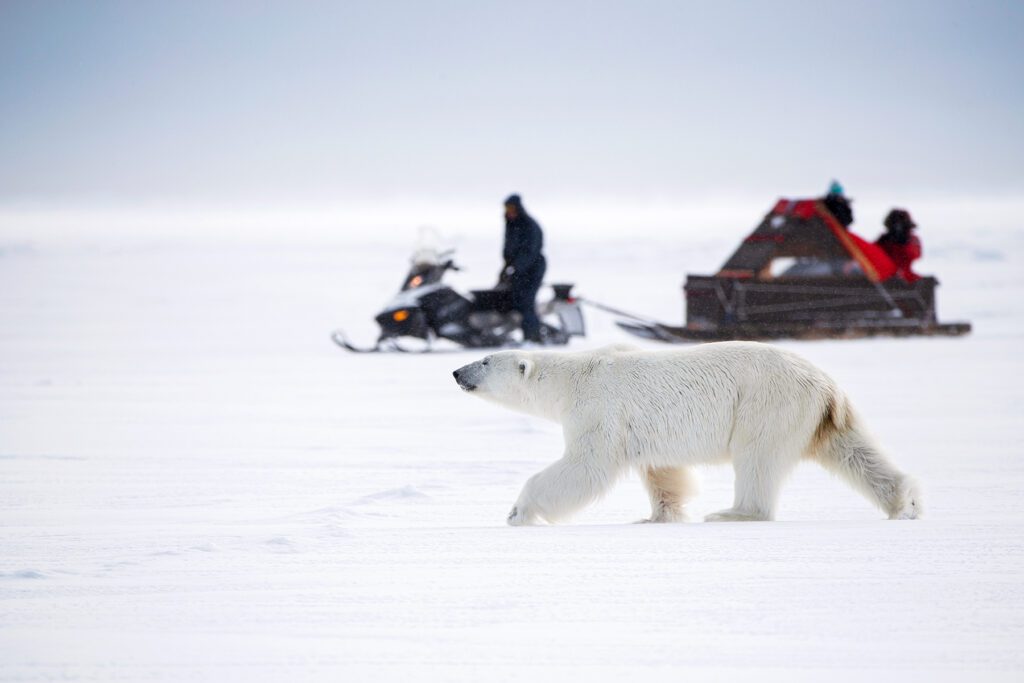

Few destinations rival Canada when it comes to wildlife. From the rugged coastline of British Columbia to the tundra of Manitoba and the mountain valleys of the Canadian Rockies, this land is home to three remarkable bear species: grizzly, black and polar bears.
If bear watching in Canada is on your list, it’s important to know that timing and location influence success. Seasonal food sources, migration patterns and hibernation cycles heavily dictate where bears are most active. If you’re hoping to witness grizzlies feasting on salmon, spot black bears grazing on a mountainside or watch polar bears hunt in the Arctic, choosing the right location at the right time will improve your chances.
Of course, wildlife sightings are never guaranteed. However, travelling with experienced Adventure World guides with local expertise on where to see bears in Canada can increase the likelihood of memorable encounters.
So, when is the best time to see bears in Canada and where should you go?
Why Canada Is One of the World's Best Places to See Bears
Canada is one of only a few destinations in the world that boast such a mix of wildlife diversity, vast protected wilderness, ethical wildlife viewing and conservation efforts.
You can potentially see three distinct bear species in Canada:
- Grizzly bears
- Black bears
- Polar bears
National parks, Indigenous Protected and Conserved Areas, wildlife reserves and remote coastal ecosystems support healthy bear populations across millions of hectares.
Bear watching in Canada is also supported by strong conservation practices. Canada’s bear viewing operations follow strict regulations to minimise disturbance to the animals. Expertly guided experiences often take place from boats, established viewing platforms or designated observation areas that help protect both wildlife and visitors.
Many of Canada’s leading wildlife destinations are also places where Indigenous communities play an important role in stewardship and conservation. Their knowledge of local ecosystems contributes significantly to protecting wildlife habitat while creating meaningful tourism experiences for visitors.
Beyond Canada’s bears, you may also encounter:
- Moose
- Elk
- Wolves
- Bald eagles
- Beluga whales
- Orcas
- Mountain goats
What Types of Bears Can You See in Canada?
Grizzly Bears
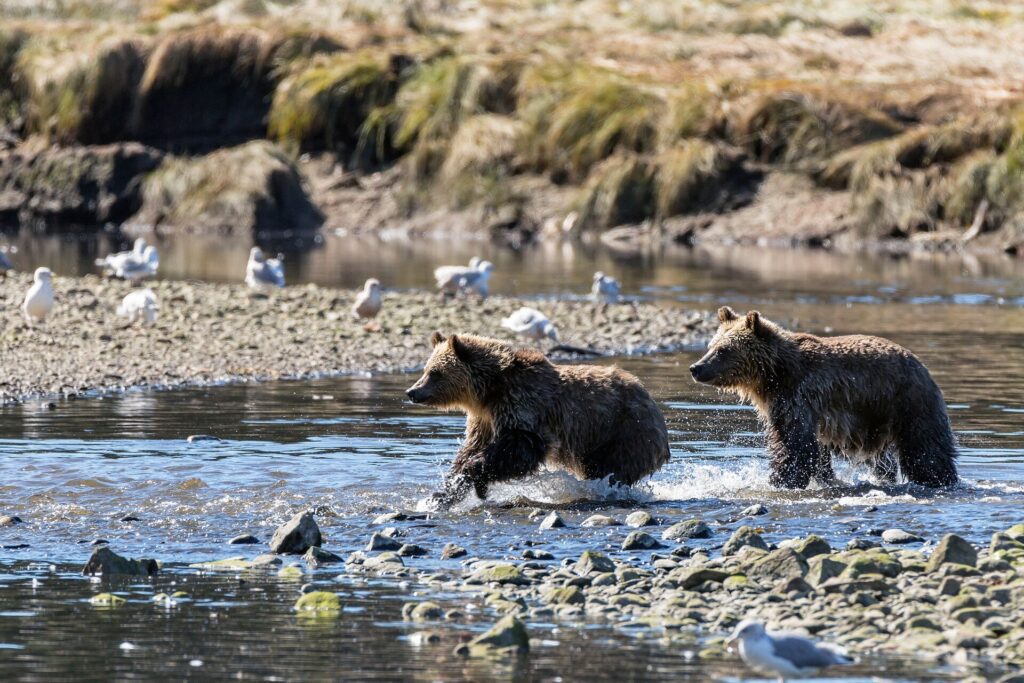
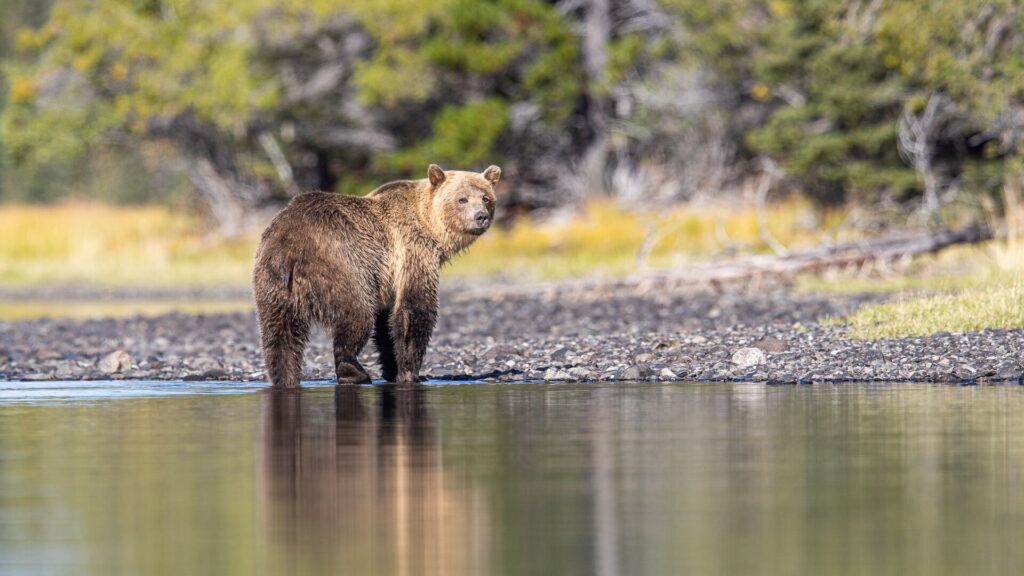
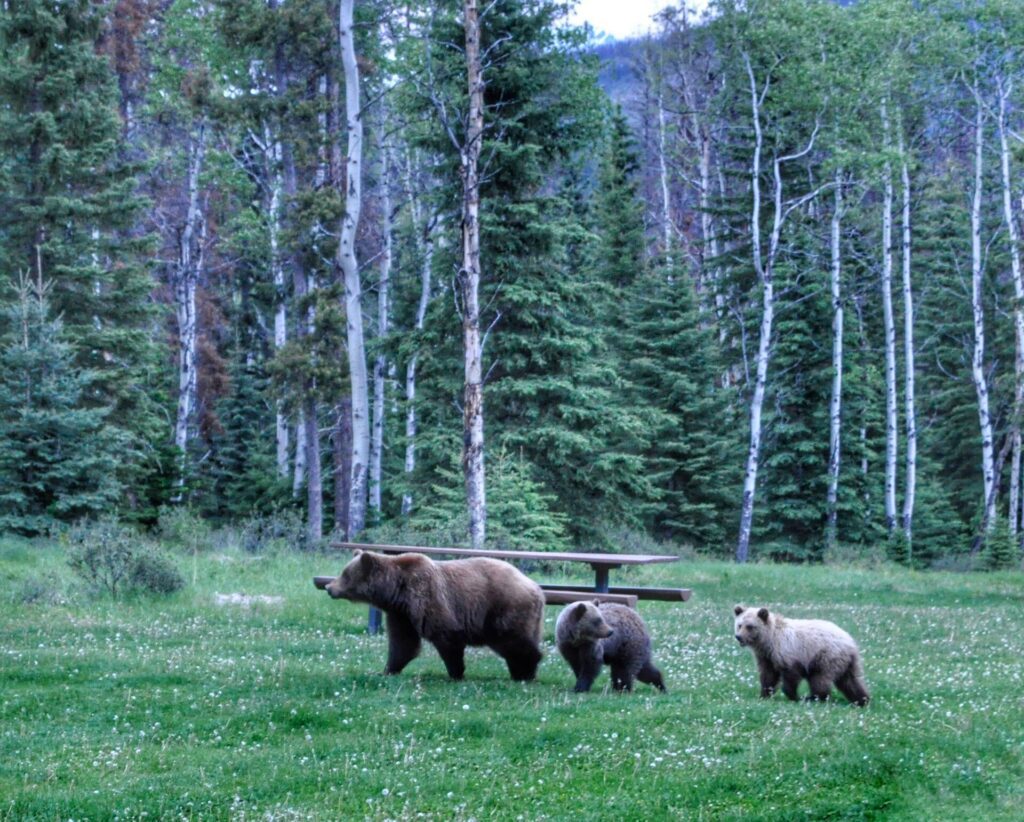
Grizzly bears are Canada’s most sought-after wildlife sighting. Easily recognised by their prominent shoulder hump and impressive size, adult males can weigh more than 300kg, although some coastal grizzlies grow considerably larger.
Grizzlies are found primarily in western Canada, including:
- British Columbia
- Alberta
- Yukon
- Northwest Territories
Their behaviour changes throughout the year as they search for food. During spring, they forage for grasses, roots and berries. By late summer and autumn, coastal grizzlies gather along rivers to feed on spawning salmon, creating some of Canada’s best wildlife viewing opportunities.
Some of the best grizzly viewing experiences include:
- The Great Bear Rainforest
- Knight Inlet
- Remote coastal lodges in British Columbia
- Select areas of the Canadian Rockies
Watching a grizzly patiently wait beside a rushing river for salmon is often considered one of the most memorable wildlife encounters in North America.
Black Bears
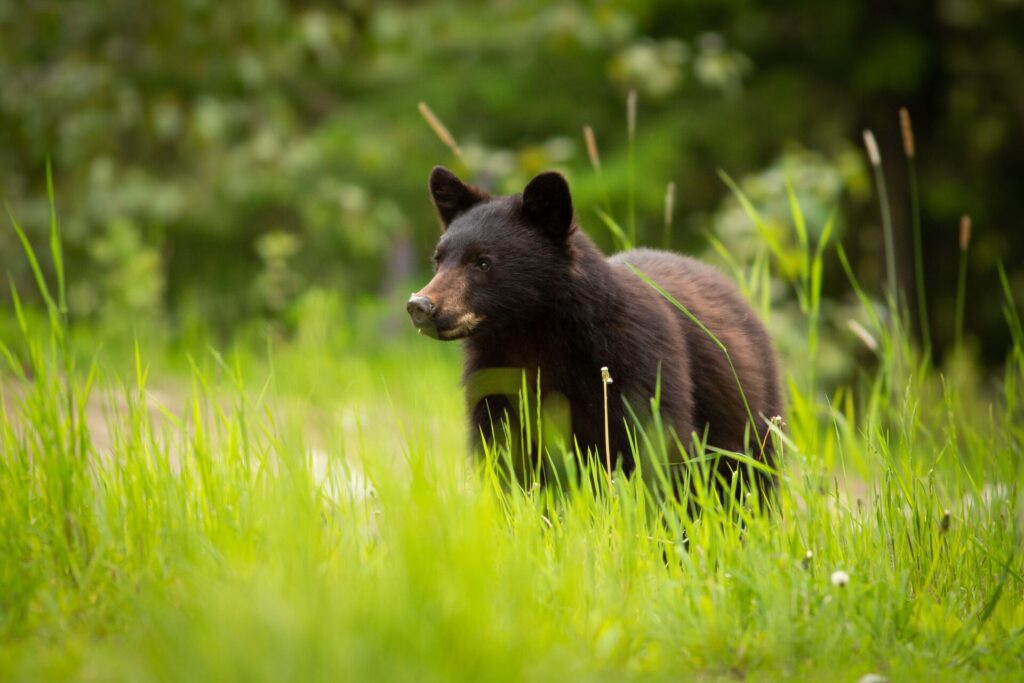
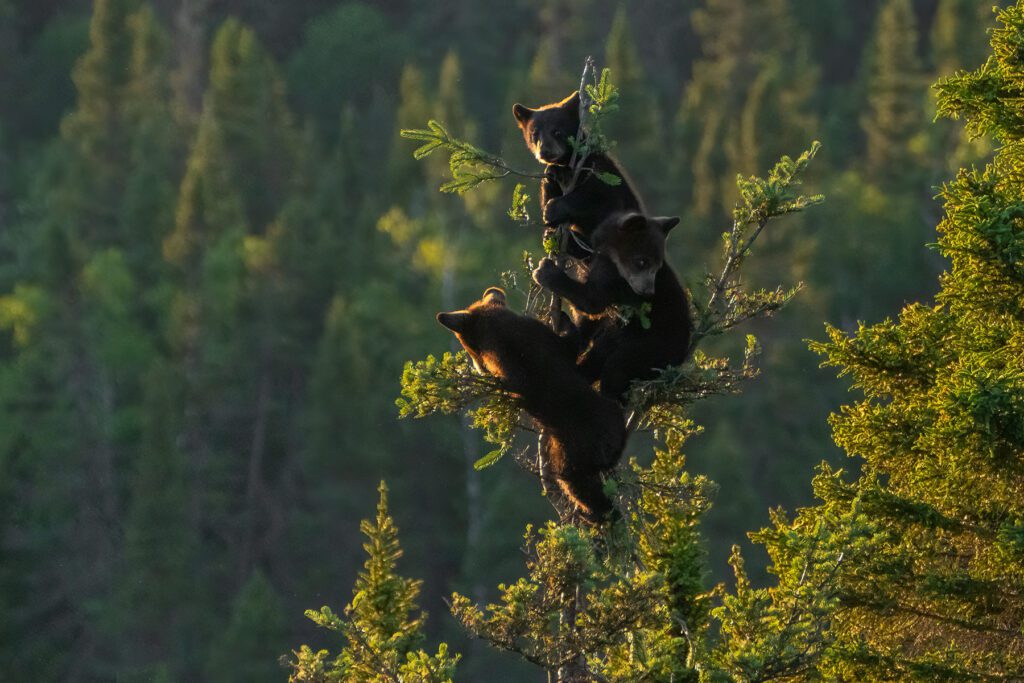
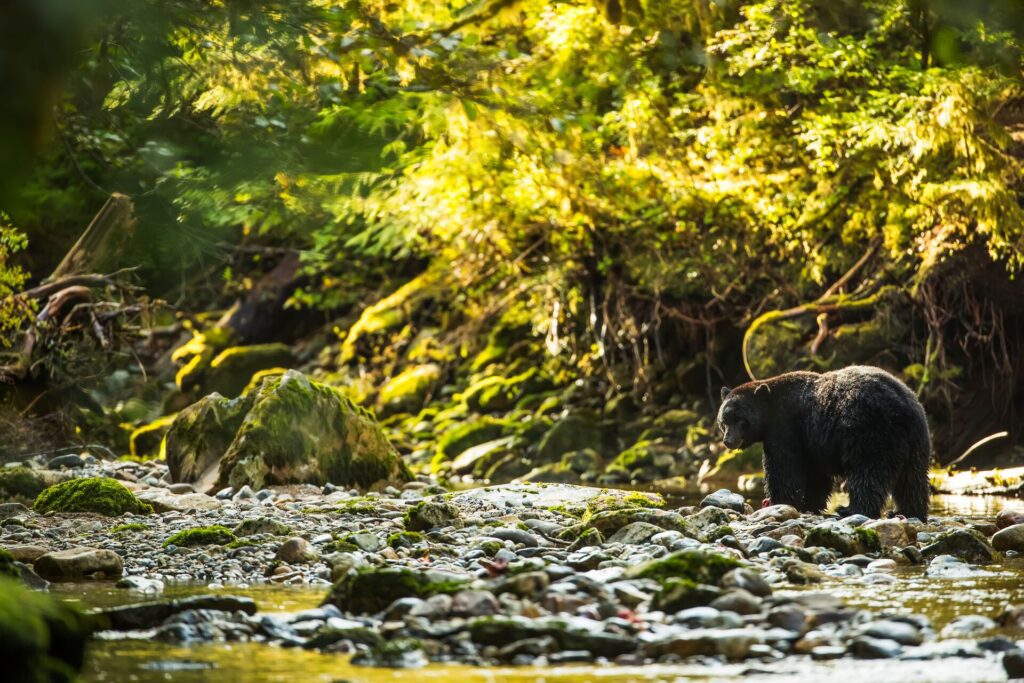
Black bears are Canada’s most common bear species and are found across much of the country. Despite their name, they aren’t always black. Their fur can range from black and dark brown to cinnamon and even blonde in some regions.
Because they are more widespread, black bears are easier for visitors to spot. Popular areas for black bear viewing include:
- Vancouver Island
- Banff National Park
- Jasper National Park
- Whistler
- Parts of eastern Canada
Black bears are generally smaller than grizzlies and are frequently seen feeding on vegetation, berries and insects. During spring and early summer, they emerge from forests to forage along roadsides, meadows and coastal shorelines.
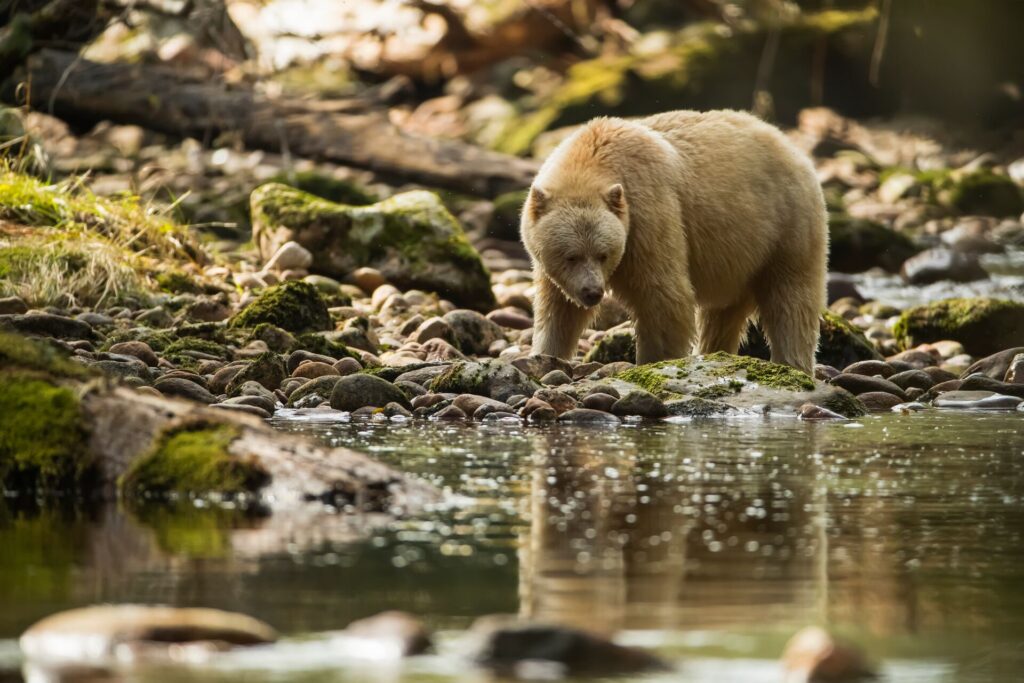
The most famous black bear variant is the Spirit Bear, also known as the Kermode bear. Found only in parts of British Columbia’s Great Bear Rainforest, this rare bear carries a genetic trait that gives it its distinctive cream-coloured coat. While technically a black bear, spotting a Spirit Bear is considered one of Canada’s most extraordinary wildlife experiences.
Polar Bears
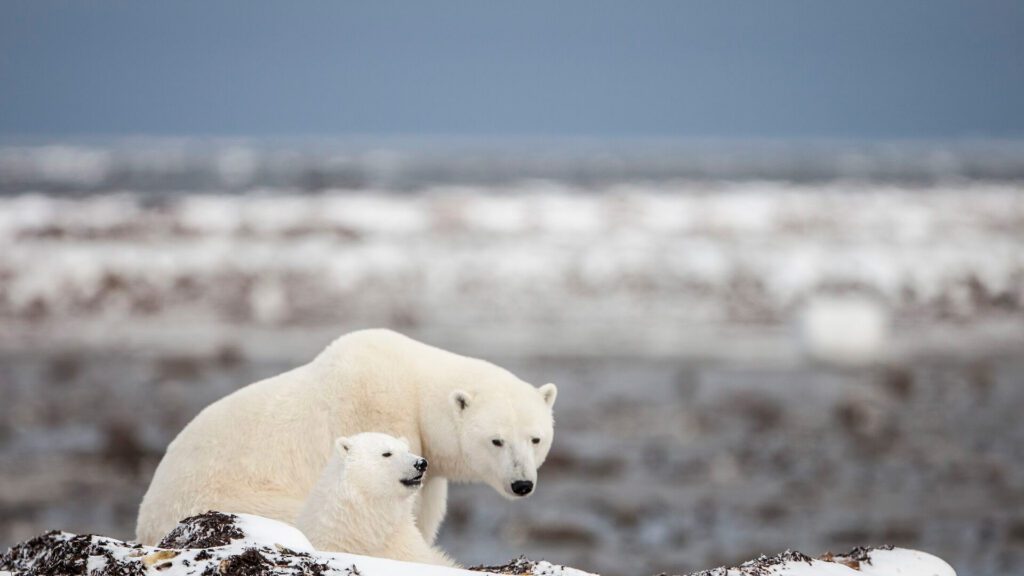
Polar bears represent one of the Arctic’s most distinct animals and are the largest land carnivores on Earth. In Canada, polar bears are most closely associated with:
- Churchill, Manitoba
- Hudson Bay
- Arctic islands
- Northern expedition cruise routes
Polar bears rely heavily on sea ice for hunting seals. As Hudson Bay begins to freeze in autumn, bears gather along the coastline waiting for conditions that allow them to head onto the ice. This seasonal behaviour creates strong viewing opportunities around Churchill, often referred to as the ‘Polar Bear Capital of the World’.
If you’re visiting northern Canada, you may also encounter Arctic wildlife such as beluga whales, Arctic foxes, snowy owls and caribou alongside polar bears.
When Is the Best Time to See Bears in Canada?
The best time to see Canada’s bears depends on which species you hope to encounter. Timing is more important than destination alone.
After emerging from hibernation in spring, bears focus on rebuilding energy reserves. As food sources change throughout the year, their movements become more predictable, making it easier to know where and when to look.
Season | Bear Activity | Best Species | Top Locations |
Spring (April to June) | Bears emerge from hibernation and actively feed | Black bears, grizzlies | Vancouver Island, Banff, Jasper, British Columbia coast |
Summer (July to August) | Increased feeding activity and longer daylight hours | Black bears, grizzlies | Rockies, Vancouver Island, Great Bear Rainforest |
Late Summer & Autumn (August to October) | Salmon runs attract large concentrations of grizzlies | Grizzly bears | Great Bear Rainforest, Knight Inlet |
Late October & November | Polar bears gather before sea ice forms | Polar bears | Churchill, Manitoba |
Winter (December to March) | Most black bears and grizzlies hibernate | Polar bears only | Arctic regions and selected northern expeditions |
Why Timing Matters
A traveller visiting British Columbia in September may have an excellent chance of seeing grizzlies during the salmon run, while the same location in early spring offers a very different experience.
Likewise, Churchill’s famous polar bear season peaks in late October and November when bears congregate near Hudson Bay. Visit at another time of year and sightings may be far less predictable.
Wildlife is always wild and sightings can never be guaranteed. However, understanding seasonal behaviour significantly improves your chances of success.
The Best Places to See Bears in Canada
Great Bear Rainforest, British Columbia
The Great Bear Rainforest bears are among the biggest drawcards for wildlife enthusiasts visiting Canada.
Stretching along British Columbia’s rugged central and northern coast, this vast temperate rainforest is one of the largest remaining coastal rainforests on Earth. The ecosystem supports healthy populations of both grizzly bears and black bears.
During autumn salmon runs, bears gather along rivers and streams. Autumn highlights include:
- Grizzly bear viewing
- Rare Spirit Bear habitat
- Guided wildlife excursions
- Remote wilderness experiences
- Opportunities to see wolves, eagles and whales
Many experiences are operated in partnership with First Nations communities whose stewardship plays a vital role in protecting the region.
Knight Inlet
For many wildlife photographers and nature enthusiasts, Knight Inlet is one of the top destinations for seeing grizzly bears in Canada. Located on British Columbia’s central coast, the inlet is known for its high concentration of grizzlies.
What makes Knight Inlet particularly appealing is its dedicated wildlife viewing infrastructure, including elevated observation platforms that allow visitors to observe bears safely while minimising disturbance.
Highlights of Knight Inlet:
- High probability of grizzly sightings during peak season
- Elevated viewing platforms
- Experienced naturalist guides
- Standout coastal scenery
- Responsible wildlife tourism practices
While sightings are never guaranteed, success rates during salmon season are often high.
Churchill, Manitoba
If you’re researching polar bears hotspots or wondering where to see them in Canada, Churchill is undoubtedly the country’s most famous destination. In fact, it’s widely known as the ‘Polar Bear Capital of the World.’
Every autumn, polar bears gather along the shores of Hudson Bay as they wait for sea ice to form.
Visitors typically explore the region on Tundra Buggies, which allow safe wildlife viewing across the tundra. Peak viewing season generally occurs from late October to November.
In addition to polar bears, Churchill is famous for:
- Summer beluga whale encounters
- Arctic birdlife
- Northern lights experiences
- Arctic tundra landscapes
For many wildlife travellers, Churchill offers the rare chance to watch polar bears in the wild, at close range and on their own terms.
Banff & Jasper National Parks
The Canadian Rockies are best known for their mountain scenery, but they also offer some of the country’s most accessible bear viewing opportunities.
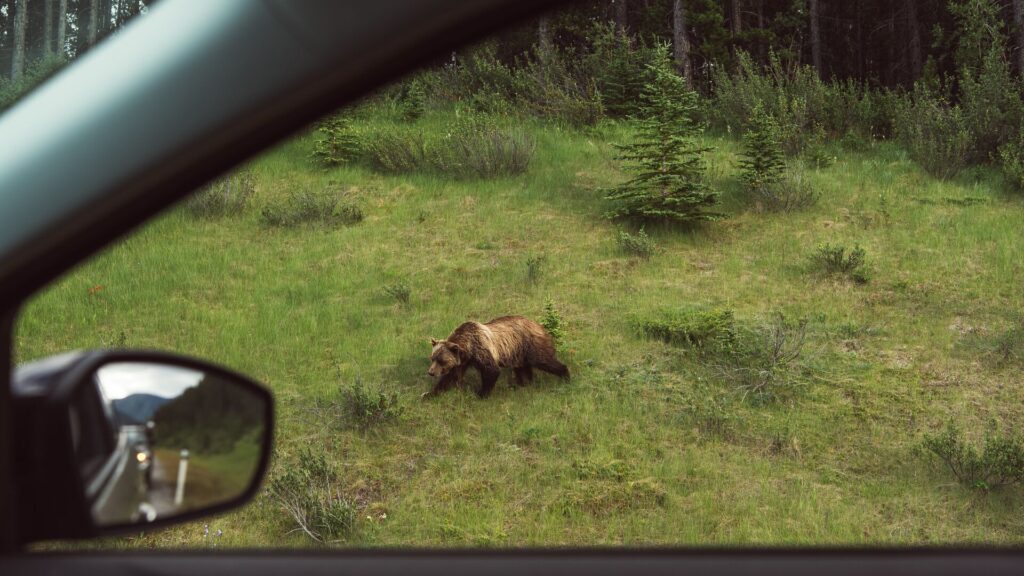
Bear sightings in Banff and Jasper frequently occur during spring and summer when animals forage in roadside meadows and open valleys.
You may encounter:
- Black bears
- Grizzly bears
- Elk
- Moose
- Bighorn sheep
- Wolves
Unlike dedicated bear-watching destinations on the coast, sightings here often occur on scenic drives, along walking trails or during guided wildlife tours. Safe viewing practices are especially important in the Rockies. Bears should always be observed from a respectful distance and visitors should never approach animals for photographs.
Vancouver Island
Vancouver Island is one of Canada’s most underrated bear-viewing destinations. The island’s coastal ecosystems provide excellent habitat for black bears, particularly during spring and early summer when bears forage along shorelines that are exposed by low tides.
Many guided tours operate from communities such as:
- Tofino
- Ucluelet
- Campbell River
- Port Hardy
You can combine black bear viewing with other wildlife experiences, including:
- Whale watching
- Bald eagle and sea otter sightings
- Coastal rainforest exploration
The combination of accessible wildlife and dramatic coastline makes Vancouver Island ideal for first-time visitors interested in Canada bear watching.
Comparing Canada's Top Bear Watching Destinations
Destination | Species | Best Months | Viewing Style | Other Wildlife |
Great Bear Rainforest | Grizzly, Spirit Bear | August to October | Boat and platform tours | Wolves, whales, eagles |
Knight Inlet | Grizzly | August to October | Elevated viewing platforms | Eagles, marine wildlife |
Churchill | Polar Bear | October to November | Tundra Buggies | Beluga whales, Arctic birds |
Banff & Jasper | Black Bear, Grizzly | May to September | Scenic drives and guided tours | Elk, moose, wolves |
Vancouver Island | Black Bear | April to September | Coastal boat tours | Whales, sea otters, eagles |
Bear Watching Tips for First-Time Visitors
Seeing Canada’s bears in the wild is a privilege, and a little preparation can significantly improve your experience.
Travel with expert guides
Adventure World’s local guides understand bear behaviour, seasonal movements and viewing regulations. They also know where animals are most likely to be active while ensuring encounters remain safe and respectful.
Keep your distance
A good sighting doesn’t require getting close. In fact, the best wildlife encounters often happen when bears remain completely undisturbed by human presence.
Never feed wildlife
Feeding bears can alter their natural behaviour and create dangerous situations for both animals and people.
Aim for dawn and dusk
Many bears are most active during the cooler hours of early morning and late afternoon.
Bring binoculars
Quality binoculars allow you to observe natural behaviour without needing to approach wildlife.
Wildlife photography tips
- Use a telephoto lens whenever possible
- Prioritise behaviour over close-ups
- Avoid sudden movements
- Follow guide instructions
- Never pressure wildlife for a photograph
Remember, a respectful observation is always more valuable than an intrusive photo opportunity.
Responsible bear watching
Responsible wildlife tourism helps ensure future generations can enjoy Canada’s remarkable wildlife.
Many of Canada’s best bear-viewing destinations operate under strict conservation guidelines designed to reduce stress on animals and protect sensitive habitats.
Choosing ethical operators helps support:
- Wildlife conservation
- National park protection
- Scientific research
- Indigenous stewardship
- Local communities
In regions such as the Great Bear Rainforest, First Nations communities play a leading role in safeguarding ecosystems that support bears and countless other species.
Viewing bears from regulated platforms, designated boats and approved observation areas benefits everyone involved. Bears can continue natural behaviours without disruption, while visitors enjoy safer, more authentic wildlife encounters.
The goal of responsible bear watching isn’t simply to see a bear. It’s to experience wildlife in a way that contributes to long-term conservation and respect for the landscapes these animals call home.
Frequently Asked Questions
What is the best month to see bears in Canada?
It depends on the species. September is often considered one of the best months for grizzly bears due to salmon runs, while October and November are ideal for polar bears around Churchill.
Where is the best place to see grizzly bears in Canada?
Knight Inlet and the Great Bear Rainforest in British Columbia are among the top grizzly bear viewing destinations in Canada.
Can you see bears in Banff?
Banff National Park is home to both black bears and grizzly bears, with sightings most common between spring and early autumn.
Where can you see polar bears in Canada?
Churchill, Manitoba, is widely considered the best place in the world to see polar bears in the wild.
When do bears hibernate in Canada?
Most black bears and grizzly bears enter hibernation during late autumn and winter, although timing varies depending on location, weather and food availability.
Can you see black bears in Jasper?
Black bears are regularly seen in Jasper National Park during spring and summer, particularly in open valleys and roadside meadows.
Is bear watching safe?
Bear watching is generally very safe when conducted with experienced guides and responsible operators. You should always follow local regulations and maintain a safe viewing distance.
Are wildlife sightings guaranteed?
No. Wildlife is unpredictable, and sightings can never be guaranteed. Travelling during peak seasons and joining guided excursions can greatly improve your chances.
What other wildlife might I see while bear watching in Canada?
Depending on the region, you may also encounter moose, elk, wolves, bald eagles, beluga whales, sea otters, mountain goats and numerous bird species.
Planning for a ‘beary’ successful holiday
Canada is home to three distinct bear species across some of the world’s most accessible wild habitats, but the ideal destination depends on the species you most want to see.
- Spring and summer: Black bears in the Canadian Rockies and Vancouver Island.
- Late summer and autumn: Grizzly bears gathering during salmon runs in British Columbia.
- Late October and November: Polar bears around Churchill and Hudson Bay.
Rather than choosing a destination first, consider the wildlife experience you’re seeking. By planning your journey around bear behaviour and seasonal changes, you’ll improve your chances of encounters and support responsible wildlife tourism and conservation across Canada’s wilderness.